
SASNET News

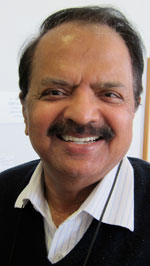
 During the academic year 2013/14, Professor Kalyan Sankar Mandal from the Indian Institute of Management Calcutta (IIM-C) in Kolkata has been appointed as the fourth Visiting Indian ICCR chair professor at Lund University. He is supposed to join the position during September 2013, and he will be hosted by the Department of Sociology.
 Kalyan Sankar Mandal is Professor of Sociology within the Public Policy and Management Group at IIM-C. He defended his PhD at IIT Bombay in 1982 with a thesis entitled ”Inequality and Development in India: Study of an Equity-Oriented Rural Development Programme”, and later worked at Gokhale Institute of Politics and Economics in Pune, and the Tata Institute of Social Sciences (TISS) in Mumbai. His research interest has primarily been Sociology of rural development, agriculture and food, education, poverty, social welfare and social policy.
Currently his research is focused on Business Solutions for Poverty. Prof. Mandal is shaping up of the idea of „social business‟ (unlike profit maximizing business, social business aims at achieving a social objective in a financial sustainable way) by an NGO with which he is closely associated. As one main cause of child malnutrition in India is unavailability of supplementary food for the children of the low income families, this NGO has set up a social business of a low cost nutritious supplementary food that it has developed. This food will be sold for the children of low income families at affordable prices for the poor for reducing malnutrition in a financially self-sustained manner through social business. This social business has been initiated with an award grant by the World Bank (more information).
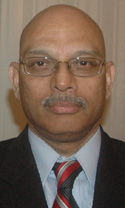

The ICCR professorship programme at Lund University is an outcome of a Memorandum of Understanding between the Indian Council for Cultural Relations (ICCR) and Lund University, that was signed on 22 June 2010 by Mr. Balkrishna Shetty, former Indian Ambassador to Sweden, and Prof. Per Eriksson, Vice-Chancellor, Lund University. In a first phase, the agreement is valid for four years, with a new Indian Professor to be selected each year.
SASNET was actively involved in finalizing the ICCR professorship at Lund University, with strong support from the Embassy of India in Stockholm. In April 2010, SASNET’s director, Dr. Anna Lindberg, participated in an official Lund University delegation to Delhi (more information), where final negotiations were held with representatives of the Ministry of External Affairs, Government of India, and the Indian Council for Cultural Relations, regarding the proposed Indian visiting guest professorship at Lund University.
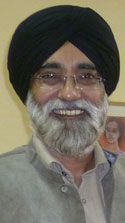
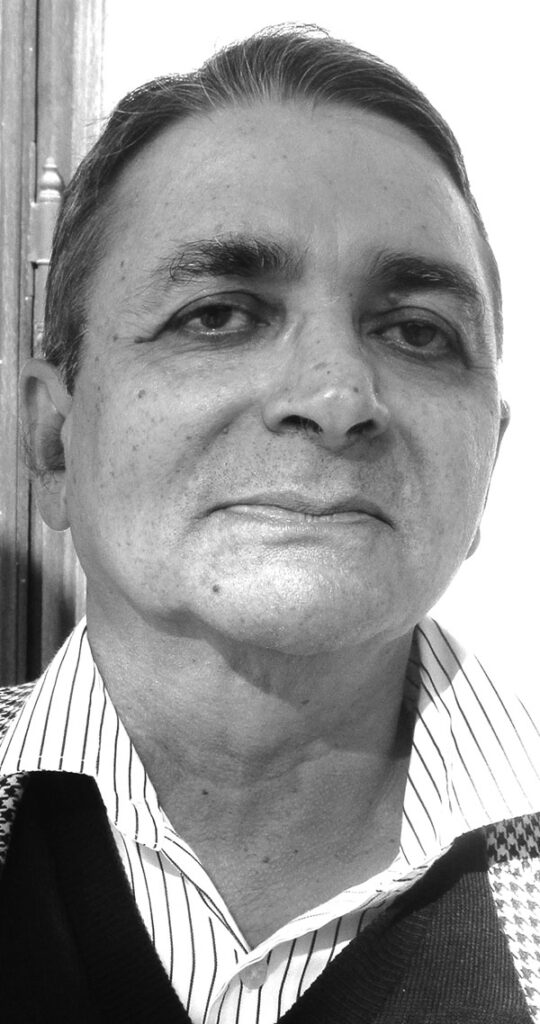
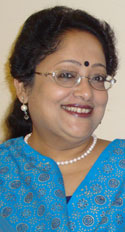
The first ICCR guest professor was Prof. Lipi Ghosh from Calcutta University. She spent the period November 2010–March 2011 at the Centre for Gender Studies. More information.
A new ICCR Visiting Professor, Gopal Karanth, arrived at Lund University in September 2011. He stayed for the full academic year 2011-12, and was hosted by the Department of Sociology.
The third ICCR Visiting Professor was Surinder Jodhka, Professor of Sociology at the Centre for the Study of Social Systems, School of Social Sciences at Jawaharlal Nehru University (JNU) in Delhi. He was installed on Friday 12 October 2012, and stayed till end of June 2013. Prof. Jodhka was hosted by the Dept of Political Science.
For the academic year 2013/14, Professor Kalyan Sankar Mandal from the Indian Institute of Management Calcutta has been appointed as ICCR chair at Lund University. He will again be hosted by the Department of Sociology.

SASNET has recruited Dr. Olle Frödin from the Dept. of Sociology, Lund University, to assist Anna Lindberg with her duties as SASNET Director. Olle joined SASNET on 1 August 2013, and will act as Assistant Director on a 40 % part-time basis during the Fall 2013. He will however primarily work from his office at the Sociology department, where he is employed as a lecturer.
Olle Frödin defended his PhD in 2008 with an Africa related thesis. Later he shifted over his research focus to South Asia, and was affiliated to the Oxford Department of International Development (ODID) at Queen Elizabeth House, University of Oxford, UK, for a couple of years, before returning to Lund University in 2011. His South Asia related research has focused on the Politics of Food and the Governance of the Public Distribution System in India, examining the political reactions to the liberalization of food procurement regulations in the country.
More information about Olle Frödin’s research.
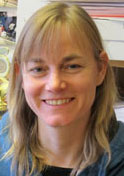
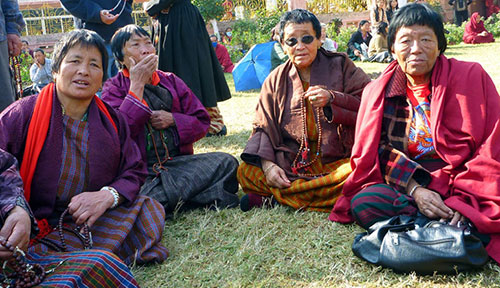
 Dr. Winnie Bothe from the Department of Political Science at Lund University holds the first SASNET/ABF Thursday lunch seminar talk for the fall semester 2013 on Thursday 26 September 2013, 12.30–13.30, at Lunds konsthall. The presentation is entitled ”Gendered Participation in the Buddhist Himalayas. Sikkim and Bhutan: A comparative study on visions of female participation”. See the poster.
In her presentation, Dr. Bothe focuses on the Buddhist women from the Kingdom of Bhutan and the Indian state of Sikkim, sharing a similar cultural background rooted in Tantric Buddhism. Given this cultural similarity she sets out to explore their political engagement under two different models of governance. The main questions asked is the extent to which these women are empowered to participate in local politics, in particular their subjective understanding of their ability to apply the room that is opened to gain influence at local village meetings.
 In both Bhutan and Sikkim women would frequently participate in local meetings. But in spite of the similarities of a Buddhist cultural background we found great disparities. In Bhutan illiterate women generally felt they were mere ‘beings’ rather than ‘political beings’, lacking the competence, self-esteem and the political value to speak up in village meetings. In Sikkim, by contrast, the illiterate women in general felt they had the self-confidence, the competence and respect that allowed them to act as ‘political beings’, in the sense of actively taking part in discussions in the meetings. Surprisingly, the difference in rights between the Buddhist women in democratic Sikkim and the monarchic system of Bhutan could not account for the difference found. In fact, the women in Bhutan held larger rights than did the women in Sikkim. Rather, Dr. Bothe suggests the difference in empowerment can better be explained by the difference in the political view of women of these two states. In Sikkim, an egalitarian gender discourse was pursued by preferential treatment for women through gender quotas, promoting a vision of the women as ‘political beings’ with a stake in local politics. By contrast, the traditional approach to governance of the Bhutanese state promoted a vision of state and religion as a male spheres, which was little conducive to the political engagement of the women.
 SASNET’s Thursday lunch (brownbag) seminar series, aimed at presenting and disseminating the eminent South Asia related research carried out at Lund University, was launched in 2011. Since last year the seminar series is organised in collaboration with Arbetarnas Bildningsförbund (ABF) Lund, and Lunds Konsthall. The seminars, open for all interested, are held once a month on Thursdays at 12.30 inside the public art gallery (Lunds konsthall) at Mårtenstorget 3 in central Lund. More information on the SASNET/ABF Thursday Lunch Seminars
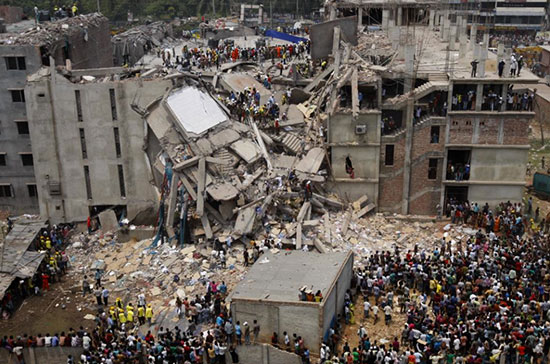
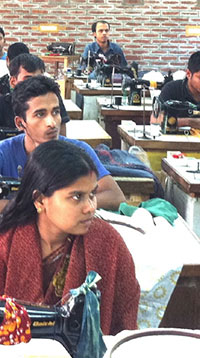
 The textile and clothing industries provide the single source of economic growth in Bangladesh’s rapidly developing economy. Today, about 4 million people, mostly women, work in Bangladesh’s export-oriented ready-made garment industry, and exports of textiles and garments are the principal source of foreign exchange earnings. The backside is super-exploitation and repression of the workers who receive minimal wages, and an alarming lack of occupational health and safety due to corruption. Deadly fires and other incidents occur regularly, and the Rana Plaza garment factory complex collapse on April 24, 2013, when more than 1 000 textile workers were killed is the worst disaster ever in manufacturing (photo).
SASNET invites to a seminar on these issues on Thursday 3 October 2013, at 15.15. The seminar is organised in collaboration with the Dept. of Sociology and the School of Social Work at Lund University, and features Professor Emeritus Doug Miller from the School of Design at University of Northumbria in Newcastle on Tyne, UK. Venue: Edebalksalen, School of Social Work, Bredgatan 13, Lund. See the poster.
 Doug Miller will give a presentation entitled ”Forcing Workers to Die – the State of Health and Safety in the Bangladesh Ready Made Garment industry”. He is a leading expert on workers rights in the fashion business. Between 2000 and 2008 he was Research Director at the International Textile Garments and Leather Workers Federation (ITGLWF), the global union for the sector. He has also authored a book, ”Last Night in Savar”, published in 2012, on the 2005 Spectrum Sweater Factory Collapse in Bangladesh (more information), and has an ongoing interest in mechanisms for costing and delivering a living wage in the global fashion industry.
Swedish writer Helena Thorfinn, now working as Communications Manager for the Raoul Wallenberg Institute of Human Rights and Humanitarian Law (RWI) at Lund University, will act as moderator. She has previously worked as a journalist and as a social analyst for Save the Children and the Swedish International Development Cooperation Agency (SIDA) in Bangladesh. Last year she presented a novel ”Innan floden tar oss/Sisters by the River” based on her work experiences. The book is a fascinating story on life in Bangladesh, including so many true-to-life experiences such as criminally dilapidated textile factories, corruption, etc. More information about the book.
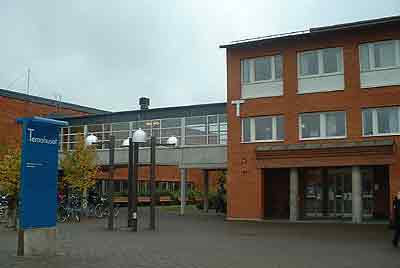
Department of Water and Environmental Studies, Tema Institute, Linköping University. Contact persons: Associate Professor Julie Wilk, and Associate Professor Anna Jonsson. This is an important research environment, with several researchers being involved in research and policy oriented projects in South Asia over the years, primarily in India and Sri Lanka. The common theme of the engagements concerns water and land resources and their management, utilisation and the implications thereof.
For many years, the department was headed by Professor Jan Lundqvist. He was involved in several major research projects on water resources management in South India, carried out in collaboration with the South Asia Consortium for Interdisciplinary Water Resources Studies (SaciWATERs) in Hyderabad, the Dept of Land and Water Resources Engineering, KTH, Stockholm, Tamil Nadu Agricultural University in Coimbatore, and Madras School of Economics in Chennai. Lundqvist later worked at the Stockholm International Water Institute (SIWI), chairing its Scientific Programme Committee till 2011, and was involved in planning the Stockholm World Water Week taking place every year in August-September.

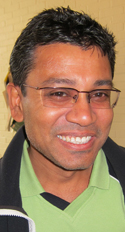
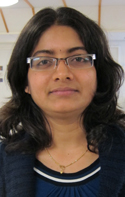

Julie Wilk and Anna Jonsson are involved in a comparative project entitled ”Designing climate-smart water adaptation strategies for sustainable urban development. A study of Cochahamba, Bolivia, and Kota, India”. Anna is also involved as a co-partner in a India related research project on climate change, water stress and adaptation carried out in collaboration with the Department of Policy Studies, TERI University, New Delhi. PhD candidate Sivakiruthika Natchimuthu works at the department since 2011. Her research focuses on greenhouse gas emissions from aquatic systems in India.
Associate Professor Joyanto Routh works at the department since 2011. Previously he worked at the Department of Geology and Geochemistry, Earth Sciences Centre, Stockholm University, where he was involved in several South Asia related projects, especially in Northeast India, Bhutan, and most recently Sri Lanka. His research interest focuses on the role of biogeochemical interactions in aquatic and sedimentary environments, and their impacts on the cycling of organic and inorganic components on different time scales. He has worked in aquifers, caves, forests, lakes, peat bogs, mangroves, and river margins, with a primary focus on climate change, ground water remediation and microbial interactions.
Former researchers from the department that have focused on South Asia include Dr. Håkan Tropp, Dr. Jenny Grönwall, and Dr. Mats Lannerstad. More information about the South Asia related research at the Dept. of Environmental Studies.
SASNET tries to keep track of all South Asia related research at the Swedish universities, and in our database we have information about approximately 300 departments where some kind of South Asia related research and/or educational collaboration projects with institutions in the eight South Asian nations is going on. Among our networking partners , we will each month present one or two of these departments and the researchers working on South Asia related projects. Go for SASNET’s list of Swedish departments.
Research Community News

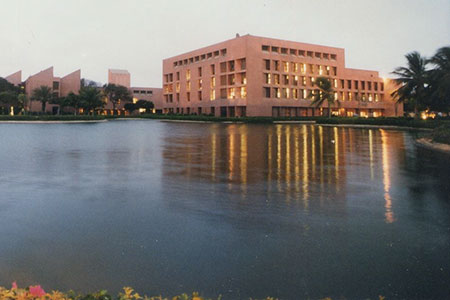 Aga Khan University (AKU) in Pakistan has announced the position as Chair for its new Division of Women and Child Health, intended to become a leading academic centre in the field of maternal and child health, recognized nationally and globally for excellence in education, research, and clinical care. The mission of the Division is to make effective and meaningful contributions to the health of women and children in Pakistan and in the developing world through the pursuit of the highest quality clinical service, innovative educational and training programmes and pioneering research and discovery.
AKU is a private, self-governing international university chartered in Pakistan in 1983, is a role model for academic, research and service programmes in health and higher education in the developing world. The University currently has teaching sites in Pakistan, East Africa, the United Kingdom and Afghanistan, and is a major component of Aga Khan Development Network.
The Division of Women and Child Health will comprise the Departments of Pediatrics & Child Health, Obstetrics & Gynecology and the Section of Feto-maternal Medicine and Neonatology. The Chair has overall responsibility for the conduct of the academic and service mandate of the Division, consistent with the mission and policies of the Aga Khan University and the Aga Khan University Hospital, inclusive of the outreach facilities recently incorporated within AKU.
The ideal candidate should have a demonstrated track record of leadership within an academic health sciences centre, teaching hospital or integrated health authority at Professor Level; be a specialist qualification in Pediatrics or Obstetrics/Gynaecology with excellent specialized clinical skills; and have experience of working in a developing country and /or the ability to adapt in this context. Applications should be submitted latest by August 31, 2013.
Full information about the position.
More information can also be given by Professor Bo Lindblad, who has experiences to share from working as Head of the Dept. of Pediatrics at AKU. Contact Bo Lindblad.
 James P Grant School of Public Health (JPGSPH) at BRAC University, Bangladesh is accepting applications from International students for its 10th batch of Master of Public Health (MPH) Programme beginning in January 2014. Application deadline for International students is 30 September 30 2013.
BRAC School of Public Health initiated this programme in 2005 with the aim of developing public health leaders. The MPH is a veritable global classroom with over half of its students and faculty originating from other countries, a gender ratio that is equally balanced, and a rich diversity of professional, academic and social backgrounds.

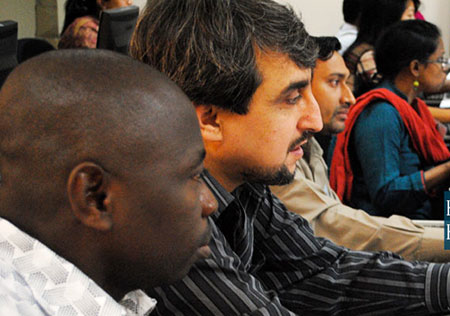 Since its inception, more than 300 hundred students have participated in the MPH program from different corners of the globe such as South Asia, Southeast Asia, Africa, Australia, North and South Americas, and Europe. The MPH curriculum is structured to maximize learning around the health problems faced by communities in Bangladesh, and elsewhere. This includes extensive field-based instructions complemented by interactive classroom based work in teams. Faculty members are from reputed international universities, institutions and research centers. More information about the programme.
The MPH has gained global recognition for its innovative approach, and was featured by the World Health Organization Bulletin in 2007 as one of the six top leading Schools of Public Health in the region (please find attached). Graduates of the MPH program have moved on to work for their respective governments, national and/or international NGOs, universities, research organizations and donor and UN agencies in Bangladesh and globally. Full information about admission to the 2014 programme.

 South Asia Research Network (SARNET) is a new research and network programme of South Asian institutions and scholars launched in May 2013. It is coordinated by the Institute for Human Development (IHD), New Delhi, in collaboration with ILO and ESCAP, with support from IDRC (Canada). Its objective is to find ways to improve the nature of growth in South Asia so as to reduce the existing vulnerability of workers, to increase the quality of employment and to enhance social protection. The other objectives of the programme include capacity building of young researchers from the region who are interested in studying labour markets. SARNET is issuing this first competitive call for papers on ‘Labour Markets, Employment and Inclusive Growth in South Asia’. The topics and issues include, but need not be restricted, to the following: ‘What has been the pace and pattern of employment creation in South Asia during the last two to three decades, and what kind of linkage can be seen with growth performance? Why is there a high level of informalization of jobs in South Asia? What kind of policies and institutions are needed to promote formalization? What are the constraints to manufacturing growth in South Asia? What are the dynamics of the emerging patterns of labour market inequality and social exclusion in South Asia? What kinds of changes are required in labour market institutions to generate high quality jobs and lead to growth for the promotion of inclusive development?
Young scholars (below the age of 35 years) of South Asian nationality (working either in the region or outside) are invited to submit proposals for empirical papers, covering any or all of the major South Asian economies, including Bangladesh, India, Nepal, Pakistan and Sri Lanka. Proposals should be received by 21 August 2013. More information.


 By the end of December 2013, the Indology studies within the Department of Oriental Languages at Stockholm University will be closed down. Indology has been a subject at Stockholm University since 1960. Since 2006, a Division of South and Central Asian Studies has existed within the department. More information about the division.
Indology studies has had two branches: an Old and Middle Indian line with classical Sanskrit as the main language and the focus on the language, literature and culture of ancient India; and a New Indian orientation with the focus on Hindi, Hindu literature and modern India. Besides, Stockhom University has offered independent courses in Hindi, both as a part-time evening course and as a distance course on the Internet; and a summer course on modern South Asian history (last run in the summer 2013).
During the Fall semester 2013, only the Indology III (third semester programme) courses are running, and from January 2014 no more courses will be given with the closure of the division. More information (only in Swedish)
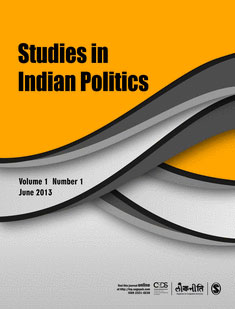
 Studies in Indian Politics (SIP) is a new peer-reviewed bi-annual journal published by SAGE in association with the Centre for the Study of Developing Societies (LOKNITI) in New Delhi, India. The magazine is being edited by Suhas Vasant Palshikar, University of Pune, and K C Suri, University of Hyderabad. SIP will publish research writings that seek to explain different aspects of Indian politics. The Journal will cover a wide variety of sub-fields in politics, such as political ideas and thought in India, political institutions and processes, Indian democracy and politics in a comparative perspective particularly with reference to the global South and South Asia, India in world affairs, and public policies. While such a scope will make it accessible to a large number of readers, keeping India at the centre of the focus will make it target-specific.
The first issue came out in June 2013, and includes excellent articles by South Asia experts such as Susanne Hoeber Rudolph, James Manor, Yogendra Yadav, Rajeev Bhargava (writing on Political Responses to Religious Diversity in Ancient and Modern India), Ashutosh Varshney, Ghanshyam Shah, Christophe Jaffrelot (writing on Gujarat Elections: The Sub-Text of Modi’s ‘Hattrick’), and Rajeshwari Deshpande. Individual articles are available for immediate purchase online, whereas print copies of individual issues can be purchased by contacting the SAGE Journals Customer Service department. Go for Studies in Indian Politics No 1/2013.

 The Center for the History of Emotions at the Max Planck Institute for Human Development, Berlin, seeks applicants for one Postdoctoral Fellowship. Projects focus on the history of emotions in South Asia from the 18th to the 20th century, and the institute has a special interst in working with Persian/Urdu texts, but are also considering proposals in other
languages (more information on current projects). The position is available from September 1, 2014, but an earlier starting date can be negotiated. The fellowship is initially for one year, with possible extensions upto three years. Successful applicants need to have a PhD degree in history, or adjacent disciplines if coupled with a strong interest in history. As the research group consists both of specialists of European and South Asian history, candidates should be interested in a cross-cultural dialogue and be able to translate their work into a more general framework. Applications should be submitted by September 15, 2013. More information.
Educational News

 The number on non-European students to Sweden has dropped dramatically since tuition fees were introduced at Swedish universities in 2011. The number has fallen with 80 p.c. Already the first year the number of international applicants – mostly coming from Africa and Asia – dropped from 132,000 in 2010 to 15,000 in 2011. To compensate somewhat, most Swedish universities now try actively to attract paying students, thereby mainly catering to wealthy segments in countries with a growing middle class such as China, India and Brazil. A trend that has received massive critique from within Swedish academic circles. The Swedish language magazine Omvärlden, published by the Swedish International Development Cooperation Agency (Sida) focuses on this topic in its August 13th, 2013, issue. Go for the article, entitled ”Avgifter stoppar utländska studenter”, written by journalist Susanne Törneman.
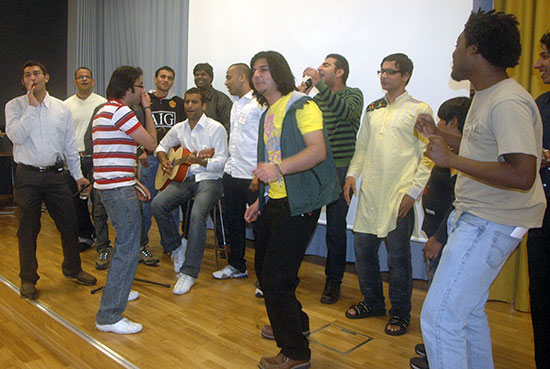
 Up until 2010, Sweden was one of the few countries in Europe where you could study for free. (On photo international students – mostly from Pakistan, India and Bangladesh, at Skövde University in 2010).
The Swedish Government then passed a law that charges tuition and application fees for students from non-EU/EEA countries. This should be supplemented by Swedish Scholarship Programmes, but the amount has been inadequate. The Swedish Institute (SI) distributes only 120 such scholarships a year to highly-qualified international students from developing countries who wants to pursue a Masters or Bachelor’s Degree in many fields of study at Sweden Universities. SI also provides a Guest Scholarship Programme for PhD candidates and Postdoctoral researchers from developing countries within all academic fields.
Most of the money for scholarships are drawn from Sweden’s development assistance budget. The Swedish Institute distributes SEK 100 m, out of which 30 p.c. are earmarked for students from the 12 countries with which Sweden has a long-term development scheme (Bangladesh is one of these countries), and the rest goes to students from 127 other developing countries (on OECD’s DAC list). Another SEK 60 m are distributed by UHR (Universitets- och högskolerådet). In addition, a significant number of Swedish universities still offer scholarships in the form of tuition waivers for international students coming through exchange programmes such as Erasmus Mundus.
See all scholarships funded by Swedish Institute.
See a list of Swedish universities that offer tuition waivers for international students.
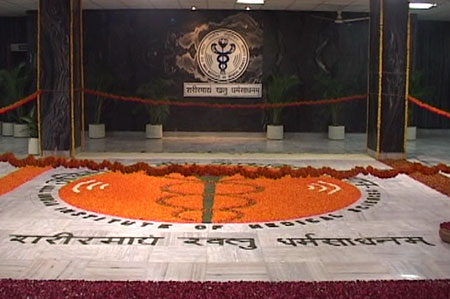 A ruling by India’s Supreme Court that appointments for highly specialised teaching positions in medical colleges cannot be subject to affirmative action caste-based quotas has led to a political uproar that has disrupted the current monsoon session of parliament, where a number of higher education bills are pending, reports University World News in an 18 August 2013 article.
 The issue of caste reservations is highly political, with elections due in five states and national elections scheduled for 2014. Political parties frequently curry favour with specific caste groups or ‘vote banks’ by promising quotas in government jobs. Medical positions are among the most prestigious of these.
The Supreme Court on 18 July 2013 ruled that there should be no reservations for faculty posts in ‘specialty and super-specialty courses’ in medical colleges. The five-judge constitutional panel’s verdict was in response to a plea by the faculty association at India’s premier medical institution – the All India Institute of Medical Sciences (AIIMS) in New Delhi. The association argued that appointments should be based purely on merit for speciality and super-speciality courses, which require another three years of medical training after the postgraduate medical degree and include cardiology, neurology and nephrology, among other specialities. But the court’s decision unleashed a barrage of criticism from political parties, particularly those supported by disadvantaged groups, which has disrupted parliament’s Monsoon session that began on 5 August 2013 and runs until the end of the month. Read more.

 The Nordic Centre in India (NCI) university consortium now launches semester programmes at Pondicherry University in Puducherry, India. Students from the 17 member universities and research institutes in Denmark, Finland, Iceland, Norway and Sweden will have the possibility to spend a full semester in Puducherry and study freely chosen courses (equal to 30 ECTS) at the university. Since many years the NCI and the Study in India Program at University of Hyderabad are running successful semester programmes in Hyderabad. The new collaboration with Pondicherry University will facilitate a second program of this kind.
Established in 1985, Pondicherry University is a Central University with 34 Departments, 10 Centres and 2 Chairs under the umbrella of totally 15 schools. The university also has two campuses in Karaikal (150 km south of Puducherry) and Port Blair (Andaman and Nicobar Islands). As an affiliating University it also has 5 Medical colleges, 16 Engineering Colleges, 30 Colleges of Education and 19 Arts and Science Colleges. The Study in India Program at the university was established in 2000 and has hosted several programs for international students throughout the years.
In 2012, the NCI initiated discussions with the Study in India Program at Pondicherry University for the purpose of establishing study and research collaboration, starting with a semester programme for students from the Nordic member universities. In 2013 the General Assembly of NCI approved the new collaboration and within short a MoU will be signed that allows for various study programs and research exchanges between the NCI and Pondicherry University. More information about the new semester programmes will be available at the NCI website during the autumn. Go for the website.
Seminars and Conferences in Scandinavia
 • Copenhagen seminar on space and emotion in Delhi during the 1840s
 Professor Margit Pernau from Max Plank Institute for Human Development in Berlin, Germany, holds a public lecture at University of Copenhagen on ”Building to feel – Space and emotion in Delhi in the 1840s” on Tuesday 20 August 2013, at 10.00. The seminar is organised by the university’s Saxo Institute. Venue: University of Copenhagen, Saxo Institute, room 12.3.7.
In order to explore the processes through which certain spaces are made to evoke certain emotions, the first part of the talk brings together approaches from the history of emotions, cultural geography, and urban studies. How is urban space built in order to create or to avoid emotions? In the second part, this question is followed up through a look on Delhi. Specially for the1840/1850s we are in the lucky position to have a wealth of multi-medial sources to draw upon, ranging from British descriptions of the city, to Saiyyid Ahmad Khan’s topography, the Asar us Sanadid, to a very detailed map of the walled city and a whole series of company paintings. More information.
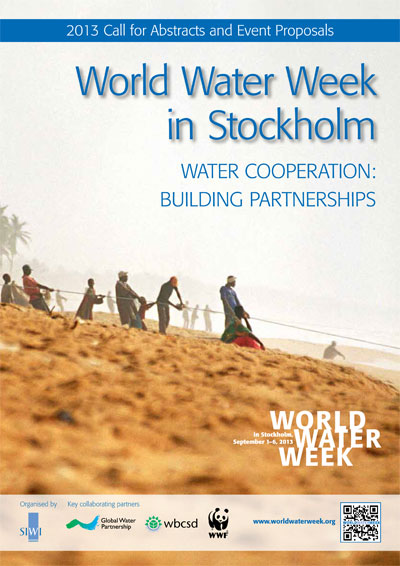
 The 2013 World Water Week in Stockholm will be held 1–6 September 2013. The theme being ”Water Cooperation – building partnerships”. As ususal, the 23rd World Water Week is organised by the Stockholm International Water Institute (SIWI). The World Water Week is the leading annual global meeting place for capacity-building, partnership-building and follow-up on the implementation of international processes and programmes in water and development, with large relevance to South Asia.
On Tuesday 3 September, a regional focus day will take place, with sessions specifically oriented towards Africa, Latin America, Asia, and Middle East.
2013 has by the UN General Assembly been declared the “International Year of Water Cooperation”. The questions to be addressed in 2013 include: why do we need to cooperate, on what, for what aim, at what level, with whom and, not least, how?
With an expected world population of more than 9 billion people by 2050, basically depending on the same finite and vulnerable water resource as today for sustaining life and wellbeing, our inter-dependence is growing every day. In 2015 we shall take stock of the achievement of the Millennium Development Goals (MDGs), and a process of developing a new set of Sustainable Development Goals (SDGs), has been initiated as an outcome of the UN Conference on Sustainable Development, “Rio +20”, in June 2012. The Rio +20 outcome document clearly states water as one key area for achieving sustainable development and thus on important part of the upcoming SGDs and post 2015 development framework.
Perspectives for building partnerships, advance future water cooperation and find solutions to the world’s water related challenges will be explored.
The 2013 World Water Week report ”Cooperation for a Water Wise World – Partnerships for Sustainable Development” is now available. The report provides input into the discussions at the 2013 World Water Week in Stockholm. The report also explore emerging issues such as the role of information and communications technology in advancing water cooperation, the importance of climate mitigation and adaptation coherence and the interplay between actors in the water, food and energy nexus. Full information about the 2013 World Water Week.
 University of Oslo hosts its 5th Annual Contemporary India Seminar, “Caste Today”, on Thursday 12 September 2013. This year’s seminar is organised by Geir Heierstad, Kenneth Bo Nielsen and Uday Chandra with support from the Department for Culture Studies and Oriental Languages (IKOS); the Centre for Development and the Environment (SUM); the Network for Asian Studies; and the Nordic Forum for South Asia (NoFSA).
The reason for choosing Caste as the seminar theme is the fact that once being a staple of Indian sociological and political analysis, caste has today been curiously marginal in recent academic discourses on India. The contemporary marginality of caste owes undoubtedly to the opening up of new areas of study concerning gender, neoliberalism, conflict, development and more. Yet caste continues to be a significant force in Indian society and politics, taking on new guises even as older pervasive hierarchies continue to seep into the present. To interrogate caste in contemporary India in its many forms and aspects, this seminar invites papers from scholars working on this subject across disciplines. Participants are encouraged to address the contemporary workings of caste, and the practices and ideas associated with it, from an empirical point of departure.
Contributions from younger scholars are particulary welcomed. As are papers that deal with the significance of caste in parts of India such as West Bengal, where caste hierarchies are generally seen as ‘weak’; or among social strata were the influence of caste is believed to be on the wane or subject to important transformations.
Deadline for full papers is 1 September 2013. More information.
 ”Memory on Trial: Media, Citizenship and Social Justice” is the overarching theme for the third Ørecomm Festival, 13–16 September 2013, a four-day event that brings an inspiring mix of seminars, lectures and conferences to Malmö, Copenhagen and Roskilde. It is jointly organised by Roskilde University and the School of Arts and Communication, Faculty of Culture and Society, Malmö University. Last year’s Festival featured an Indian panel, as a result of a collaboration project entitled ”Memories of Modernity II” between Malmö University and the Srishti School of Art Design and Technology, Bangalore. This experimental project of combined academic and artistic research will now be documented during one of the workshops at the third Ørecomm Festival. Papers will be presented by Nicolas Grandi and Deepak Srinavasan from Srishti, and Jyothsna Belliappa, who recently moved to Azim Premji University in Bangalore. The workshop will be moderated by Oscar Hemer.
A separate workshop will be dedicated to the issue of “Methods of Analysis in Ethnographic Studies of Mediated Memories”, condducted by the Media/Ethnography Group with Annette Markham, S. Elizabeth Bird and Jo Tacchi. Finally, another South Asia related event will take place at the Festival, when Urvashi Butalia, Publisher, Kali for Women in New Delhi, India, will hold a presentation entitled “Difficult Memories: Speaking about Sexual Violence”. More information with full programme.
 Lund University Development Research Day 2013 will be held on Thursday 19 September 2013. The title for the one-day conference is ”Gendered Developments – Imaginings, Politics and Practices”. The Development Research Day is an annual event intended to bring together those interested in development issues from a wide variety of disciplines. This year it is hosted by the Faculty of Social Sciences.
Confirmed keynote speakers are Wendy Harcourt, Naila Kabeer and Margot Wallström. Al Lund University students and researchers interested in gender and development are invited to participate and share their research findings and ideas. The deadline for submitting an abstract of 200-250 words is 19 August and they should be sent to Eda.Farsakoglu@soc.lu.se. A detailed programme will be available at http://www.sam.lu.se/drd in due course. See the poster.


 The Institute of International Education (IIE), Department of Education at Stockholm University co-organizes the 4th Education for Rural Transformation (ERT) International Symposium to be held 18–20 November 2013 at Kasetsart University in Bangkok, Thailand. The theme for the Symposium will be “Research-Based Evidence of Good Practice”. It is being hosted by the Faculty of Education at Kasetsart University.
The Education for Rural Transformation Symposiums were initiated by Professor Vinayagum Chinapah at IIE in order to encourage the development of education systems that could transform and improve the life of the rural poor. The first one was held in Stockholm, Sweden 2010, the second one in Chengdu, China 2011 and the third one in Vadodara, India 2012. These conferences brought together university researchers and the teachers and educators working in schools and education institutions in rural areas in countries such as China, India, Thailand among others. The in-depth comparative studies, both qualitative and quantitative, presented at these conferences provided information that is required if a successful rural transformation is to be achieved through education. The papers and discussions at these conferences all point to the necessity of re-examining the role of education and learning in rural areas as well as to re-evaluate present policies and priorities (both national and international) with regards to the perspectives of rural people. More information about the 2013 Bangkok conference.
 An international and interdisciplinary conference entitled ”Culture, Values and Justice” will be held in Vaasa, Finland, 21–23 May 2014. It is organised by the Society for Indian Philosophy and Religion in collaboaration with the University of Vaasa; and the Institute of Cross Cultural Studies and Academic Exchange in Burlington, North Carolina, USA. The conference convener is Dr. Chandana Chakrabarti. Suggested subtopics include Ethnic Identity & Culture; Society, Culture & Consumption; Indian Civilization & Society; Cultural Shock; Society & Effect of Colonization; Reductionist Approach to Moral Responsibility; Archaeological Approaches to Society; Asian Society & Culture; Secularization of Religion; Culture & Postmodernity; and Cultural Roots of Environmental Problems. Deadline for paper proposals was 10 August 2013. More information.
Conferences and workshops outside Scandinavia

 The Centre for Asian Studies of the University of Kelaniya, in collaboration with the International Association for Asian Heritage (IAAH) and the Ministry of Culture and the Arts, invite to an International Conference on “Asian Art, Culture and Heritage”, to be held during 21-23 August, 2013, at the Sri Lanka Foundation Institute, Colombo, Sri Lanka. Abstracts for conference presentations are invited on the following themes: 1. Recent studies in Archaeology; 2. New perspectives in History; 3. Trends in Heritage Management, Museology and Tourism; 4. Critical studies in Religion, Language and Literature; 5. Aspects on Arts, Culture and Society. More information.
The New Zealand India Research Institute, established in 2012, will be formally launched with an international conference to be held at Victoria University of Wellington on 28–29 August 2013. The conference is entitled ”Changing India: From Decolonization to Globalization”. It aims to examine critically some of the issues related to changing India’s much talked about economic growth and its evermore globalised position in the 21st Century. The inaugural keynote address to this conference will be delivered by Professor Kaushik Basu, Senior Vice President and Chief Economist, World Bank (until recently Chief Economic Adviser, Ministry of Finance, Government of India). There will also be other eminent special invited speakers. More information.

 The India Media Centre and the China Media Centre of the Communication and Media Research Institute (CAMRI) of the University of Westminster, London, UK, organises an international conference entitled ‘Communicating Soft Power: Contrasting Perspectives from India and China’, on 9-10 September 2013. SASNET’s deputy director Lars Eklund will participate in the conference.
This two-day international conference will explore competing and contrasting approaches to soft power in India and China, the world’s two fastest growing economies, whose rise is set to reconfigure global power equations in a multi-polar world. The conference will discuss the American origins of the concept and how it has been extrapolated in non-American contexts, namely in India and China. Contributors to the conference will examine whether soft power needs to be de-Americanized and expanded to be more inclusive, and historicized to take account of the role of countries and civilizations, such as India and China, in the global communication sphere.
The University of Westminster, which hosts the highest-ranked research department in media and communication in the UK, is home to specialist media research facilities in the China Media and India Media Centres. This pioneering attempt to discuss Asian soft power in a comparative frameworkwill provide an opportunity to examine the strengths and limitations of the idea of soft power, deploying a multi-perspectival approach.
Keynote plenary speakers include Professor Amitabh Mattoo from the Australia-India Institute in Melbourne, Australia (and Jawaharlal Nehru University, New Delhi). Venue: University of Westminster at its central London campus. Full information.
 The tenth International workshop on Tamil Epigraphy will be held 16 – 27 September 2013. Please note that the workshop will be held in Pondicherry and in Tanjavur in Tamil Nadu, India. It is coordinated by Dr. Appasamy Murugaiyan from the research group Iranian and Indian Worlds at Ecole Pratique des Hautes Études (EPHE), University of Paris 3 (Sorbonne Nouvelle); Dr. K. Rajan, Pondicherry University; and V Selvakumar from Tamil University, Thanjavur. No registration fees are required, but each participant has to bear the cost of practical works and travelling to different sites. The workshop will be held from Monday till Friday, morning 9.30 a.m. to 12.30 p.m. (lunch break) afternoon 2.00 to 4.00 p.m. The participants have to arrange themselves their travel. This special program, part of the regular seminar, is organised as requested by many researchers on humanities working on Tamil in different countries. More information.
An international and interdisciplinary conference on ”Law, Culture and Morality: East and West” will be held at University of Illinois at Urbana-Champaign, USA, 4–5 October 2013. Subtopics include Laws of Manu & Other Hindu Lawgivers; Islam & Law; and Buddhist Ethics. Papers from the conference will be published subject to editorial review in the Journal of International and Interdisciplinary Studies / Journal of Indian Philosophy and Religion. More information.

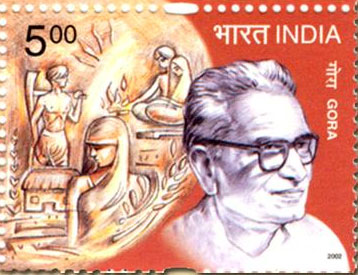 The Atheist Centre 75 Years International Conference will be held in Vijayawada, Andhra Pradesh, India, 5–6 January 2014. The 75 years of Atheist Centre witnessed two of the world renowned atheist social reformers and well-known Gandhians, Gora (1902-1975) & Saraswathi Gora (1912-2006), starting the Atheist Centre in 1940 and paving the way to build atheism as a life stance/way of life and positive atheism as a philosophy. Atheist Centre has been involved in a plethora of activities reaching out to a large number of people across India and globally. All through its voluntary service, Atheist Centre has been able to undertake multifarious programmes for the all-round development of the society. It was closely associated with Mahatma Gandhi and the Gandhian movement in India. The discourse between Gora & Gandhi was published in a book titled ‘An Atheist with Gandhi’, by the official Gandhian publishers. Both Gora & Saraswathi actively participated in the freedom movement and satyagrahas and were arrested on many occasions in pre & post independent India.
The two-day international conference is a great occasion for atheists, humanists, rationalists, freethinkers, skeptics, social workers, reformers, academicians, human rights activists, peace builders and agents of social change and scientific temper, to discuss on issues that are affecting the society and world at large. Full information.
 An international and interdisciplinary conference entitled ”Language, Culture and Values: East and West” will be held in New Delhi, India, 16–18 December 2014. It is organised by the Society for Indian Philosophy and Religion in collaboaration with the School of Language, Literature and Culture Studies of Jawaharlal Nehru University (JNU) in New Delhi, India; and the Institute of Cross Cultural Studies and Academic Exchange in Burlington, North Carolina, USA. The conference convener is Dr. Chandana Chakrabarti. Suggested subtopics include Language and Culture, Ethnic boundaries, Globalization and Values, Culture and Cognition, and Cultural Change. Deadline for paper proposals is 26 January 2014. More information.
Business and Politics

 The Swedish Government has appointed Mr Tomas Rosander as new Ambassador to Pakistan. The decision was taken on 16th May 2013. He is currently anti-terrorism coordinator at the Ministry for Foreign Affairs Security Policy Department, but has previously served at the Swedish embassies in Tehran, Washington and London, and in the Ministry for Foreign Affairs Americas Department and Press, Information and Communication Department. He has also been Consul-General in Los Angeles. Mr Rosander will take up his new post in late autumn 2013.
 On 8 August 2013, the Swedish Government decided to start work on producing a new strategy for its development assistance to Afghanistan for the period 2015-2019. Similar to the strategy for 2012-2014, the Government wants development assistance for the period 2015-2019 to focus on education, democracy, human rights and gender equality in Afghanistan. New priorities are increased employment, economic integration, and the development of the private sector and rural areas. Sweden’s commitment to Afghanistan is long-term. At the Tokyo Conference in July 2012, Sweden announced its intention to support Afghanistan during the period 2015-2024 with an indicative volume range of SEK 8-8.5 billion. The results offers that the Swedish International Development Cooperation Agency (Sida) has now been instructed to produce will be based on a country allocation to Afghanistan of SEK 4-4.25 billion during the period 2015-2019. This is a strong increase compared with the current development assistance levels of approximately SEK 600 million per year. Read more.
South Asia related culture in Scandinavia

 The ”Incredible India” cultural festival will be held in Uppsala for the third year in a row, 3–22 September 2013. The festival is again organised by Kulturum in collaboration with the Forum for South Asian Studies at Uppsala University (FSAS), and with support from the Embassy of India. The programme includes art and photo exhibitions, concerts and dance performances, lectures, screening of Indian films, Indian cooking and much more.
A cultural evening will be organised on 14 September, featuring a concert with Sur Shakti and Garam Masala, Classical Indian dance and a Bollywood workshop for children, Hindi handprinting, Indian bazar with handicraft, clothes, art, food and more. On the same day, Slottsbiografen organises a programme devoted to 100 years of Indian film production, showing films provided by the Indian embassy. This is followed by a three-day Indian Film Festival on 20–22 September. As part of the festival, Uppsala University will also involved in organising seminars. Full information about the 2013 Incredible India festival in Uppsala.
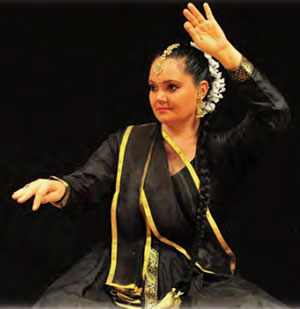
 Veronica Tjerned will dance and talk about the North Indian traditional Kathak dance at Brokiga Bengalen Butik on Tuesday 27 August 2013, at 18.00. During her performance, Veronica will give an introduction to Kathak and Hindustani Music. She is a trained dancer in ballett, jazz and modern dance, but also in Indian dance form such as Kuchipudi, Bharata Natyam and Kathak. Her Kathak training she got from Bharatiya Vidya Bhavan in London. Nowadays Veronica works as a solo artist, choreographer and dance teacher in Stockholm. Download event poster. Venue: Brokiga Bengalen, Åsögatan 69, Stockholm.
Best regards
Lars Eklund
Deputy director/webmaster
SASNET/Swedish South Asian Studies Network