≈
SASNET News
• Third ICCR Professor successfully installed at Lund University

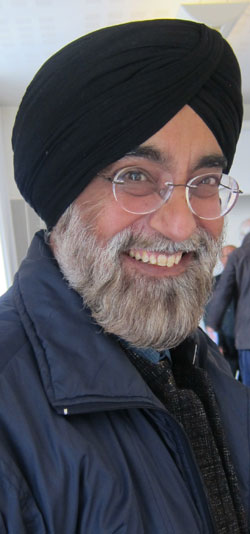 On Friday 12 October 2012, Surinder S. Jodhka, Professor of Sociology at the Centre for the Study of Social Systems, School of Social Sciences at Jawaharlal Nehru University (JNU) in Delhi, was installed as the third Visiting Indian Council for Cultural Relations (ICCR) Professor at Lund University. He is hosted by the Department of Political Science during the academic year 2012/13, till June 2013.
An installation ceremony was organised at Lund University’s Palaestra auditorium, where Professor Jodhka gave an inaugural lecture on the theme ”Indian Village in the ‘Neo-Liberal’ Times: Changing Economies, Power and Identities”. The informed presentation was based on field work he has carried out in the rural areas of Haryana state in north India. The audience consisted of an interested crowd of Lund University researchers, students and others.
His lecture was preceded by a presentation by the Indian Ambassador to Sweden and Latvia, Ms. Banashri Bose Harrison, who had come to Lund specifically to participate in the installation ceremony. Introductory speeches were also given by Professor Tomas Bergström, Dept. of Political Science, and by Dr. Anna Lindberg, Director, SASNET.
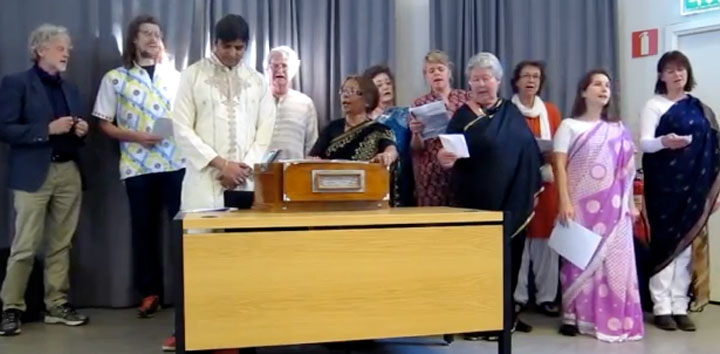
The seminar ended with a short cultural programme with the Indian Choir of Lund, led by Bubu Munshi Eklund.
More information about Prof. Jodhka and the installation seminar.
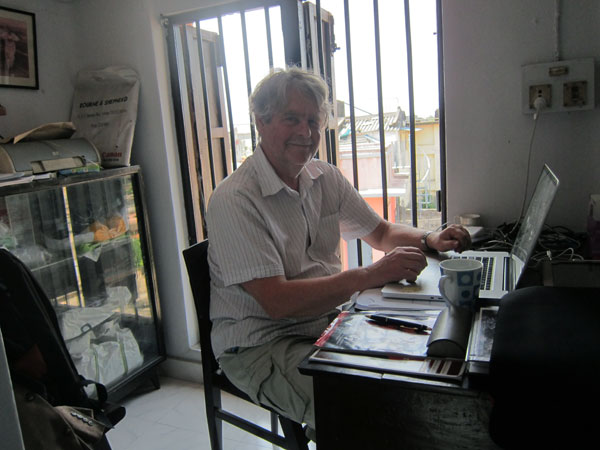 During the period 20 October till 30 November 2012, SASNET deputy director Lars Eklund will be away from the SASNET office at Lund University. This means that the web site may not be updated as frequent as usual during these six weeks, even though Anna Lindberg and Jonathan Stoltz will do their utmost to keep things running.
Lars will mostly enjoy some free time with his family in Kolkata, interspersed with musical performances and other cultural activities, but he will of course also interact with SASNET networking partners at the universities in Kolkata, and set up a small SASNET office at his Sardar Sankar Rd residence. A week-long tour to Varanasi, Kanpur and Delhi is also scheduled, with visits to Banaras Hindu University (BHU), IIT Kanpur, the South Asian University in Delhi, and a number of other institutions on the programme. In mid-November, Lars will also visit Kathmandu for five days, and meetings are being planned for at Tribhuvan University.

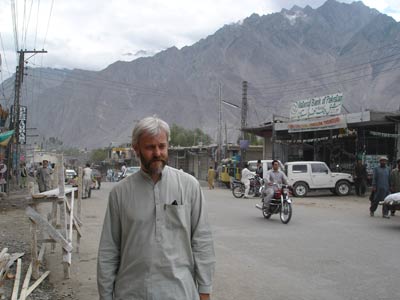 On Thursday 15 November 2012, at 12.30, Associate Professor Jan Magnusson, School of Social Work, Lund University holds a SASNET lunch seminar on ”The Baltistan Movement and the Political Power of Pop Ghazals”, focusing on on the political role of pop ghazal music in Baltistan, an area in the western Himalayas on both sides of the border between India and Pakistan. It will be the third SASNET Brown Bag seminar for the fall semester 2012, held in collaboration with Arbetarnas Bildningsförbund (ABF) Lund, and Lunds konsthall. Venue: Konsthallen, Mårtenstorget 3, Lund.
Dr Magnusson will talk about his research on the political role of pop ghazal music in Baltistan. This region in the western Himalayas is characterized by its blend of Muslim Shi’ite and Tibetan culture, and its vernacular Tibetan dialect. The Balti pop ghazals are modern versions of an Arabic poetic tradition and present an alternative narrative of local history and belonging that is situated in a Himalayan rather than South Asian context. The pop ghazals have become symbolic in local resistance against attempts of India and Pakistan to integrate the Balti people in the postcolonial nationstates and are at the core of the so called Baltistan Movement’s activities. See the seminar poster.
 SASNET organises Brown Bag lunch seminars in collaboration with ABF, Sweden’s largest adult liberal education association, and the municipal art gallery of Lund (Lunds konsthall). As usual, lectures are given by eminent Lund University researchers working on South Asia related projects, and are held once a month on Thursdays. The remaining 2012 seminar will be held held on 6 December (Dr. Emily Baird, Department of Biology). Programme for the fall 2012 (as a pdf-file)
In the No 7/2012 issue of Lund University magazine LUM, journalist Ingela Björck wrote an article on the seminar series. Read the article.
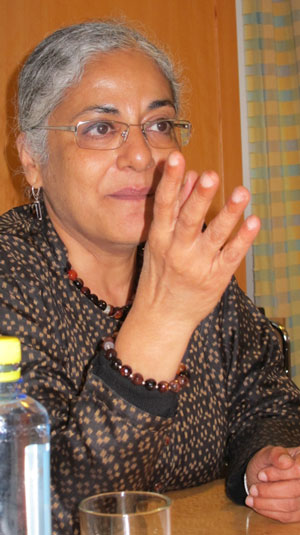
Indian writer Githa Hariharan held a SASNET lecture at Lund University on Friday 5 October 2012. She talked about ”Living Diversity, Living Many Indias”, on Indian literature for an interested audience. The seminar was organised in collaboration with the Nordic Centre in India (NCI), and the Centre for Theology and Religious Studies (CTR), Lund University. See the seminar poster.
Githa Hariharan’s published work includes novels, short stories, essays, newspaper articles and columns. Her fiction has been translated into several languages, but so far not Swedish. During the seminar she presented her literary works, from the first one, The Thousand Faces of Night (1992) that won the Commonwealth Writers’ Prize in 1993. In her presentation, she discussed the idea of diversity being part of formal policy in India – there is a powerful official form of diversity, spoken in the “language of the Indian nation”. Beginning with the hybrid and heterogeneous nature of Indian culture and cultural artefacts such as the novel, the poem or autobiography, Githa Hariharan examined what we can learn about the “many Indias” from selected novels, poems and autobiographies by those from the margins of official mainstream India – women, dalits, and the working class.
Githa Hariharan arrived in Lund as the final part of her tour to Scandinavia. She had been participating in a number of literary programmes in Denmark, including academic seminars organised by the universities of Copenhagen and Aarhus, as part of the ongoing 2012 India Today/Copenhagen Tomorrow Festival. More information.


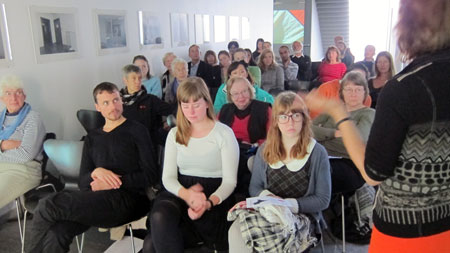 On Thursday 11 October 2012, Dr. Anna Lindberg, SASNET’s Director, held a well-attended lunch seminar on ”Paradise Limited: Marriage and Dowry in Kerala”.
The South Indian state of Kerala is known to many for its green natural surroundings and beautiful beaches. It is advertised as “God’s own country” – a paradise on earth. It is also reputed for its high social indicators in education and health care, including a higher status for women than elsewhere in India. However, Anna challenged the general view. if we look into less conventional indicators, such as gender-based violence, suicide, and mental health, women in Kerala are not doing so well. It has also been claimed that preferences for male children and dowry-related violence were absent in Kerala due to the matrilineal family system in the region. During the early twentieth century, only a few Christian groups and a small number of patrilineal Brahmins practiced dowry. In the past fifty years, however, dowry has spread to almost all groups in Kerala, including the “lowest” castes and classes, and to most Muslim groups as well. A major financial goal for many parents has become the accumulation of large dowries for their daughters’ marriages in order to secure good spouses. This development has interrupted the process of women’s empowerment. How has dowry become so well-established in Kerala that it is taken as almost self-evident, while at the same time it is condemned as a social evil? See the seminar poster.
 • Indian Ambassador met with Lund University researchers
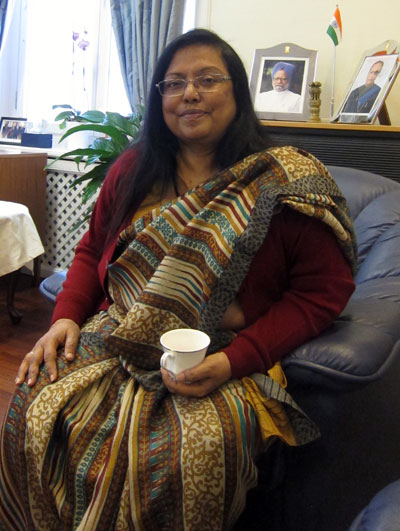
On Friday 15 October 2012, new Indian Ambassador to Sweden, Mrs. Banashri Bose Harrison, made her premiere visit to Lund University. Besides participating in the installation seminar of the new ICCR Professor at Lund University, the Ambassador was invited to attend a meeting with prominent Lund University researchers working on India related projects. The meeting was organized by SASNET, and was held at the Division of External Relations (ER). During her full day programme at Lund University, the Ambassador also met with the Vice Chancellor, Professor Per Eriksson. More information.
Professor Surinder Jodhka, Visiting ICCR Professor at Lund University during the academic year 2012/13 holds a SASNET lecture on ”What’s happening to the countryside: Agrarian Change and the Social Order of Caste in Northwest India” on Thursday 1 November 2012, 13 – 15. The seminar is organised in collaboration with the Department of Sociology. Venue: Dept. of Sociology, Conference room 1, Paradisgatan 3, Lund.
Surinder Jodhka is a renowned sociologist from Jawaharlal Nehru University, New Delhi who is specialized in rural transformation in Northwest India. Among his many books are: Caste. Oxford India Short Introductions. Delhi: Oxford University Press. 2012. Village Society: Culture, Politics and Social Life in Rural India: Orient Blackswan. Edited. 2012. Changing Caste: Mobility, Ideology, Identity. New Delhi: Sage Publications. Edited. 2012.
In the lecture/seminar Jodhka will focus on his panel study of two Haryana villages, first in 1988-89 and then in 2009. There are significant changes and transformations like generally higher income, a changed division of labour, a sharp increase in non-farm income, and exit of Dalit labourers from agriculture. This is then compared with other studies in the region. See the seminar poster.
• More information about SASNET and its activities
See SASNET’s page, http://www.sasnet.lu.se/sasnet-news
Research Community News
• ISP support to Bangladeshi research institutions evaluated
 Tatjana Kuhn, Masters student in International and European Relations at the Dept. of Management and Engineering, Division of Political Science, Linköping University, has written her masters thesis on the International Science Programme’s (ISP) collaboration support to Chemistry and Physics in Bangladesh. The thesis from 2012 is entitled ”The International Science Programme in Bangladesh: A case of Self-interest, Interconnectedness or Social Empowerment?”, and is available on the Net. Go for the thesis.

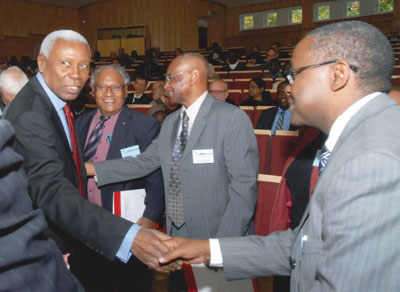 International Science Programme was established in 1961 – in 2011 it celebrated its 50 years anniversary – see photo. The purpose of the ISP is to contribute to the development of active and sustainable environments for higher education and scientific research in developing countries, within the basic sciences chemistry, mathematics, and physics, with the objective to increase the production and use of results relevant for the fight against poverty by researchers in the basic sciences in developing countries. ISP provides long‐term support to Research Groups and Scientific Networks. The work is carried out in close cooperation with research groups at more advanced host institutions. In Asia, ISP previously was much engaged in Sri Lanka, but since a few years back the initiatives focus only on Bangladesh, Cambodia and Laos.
In 2011, Sida funding was used to support 31 Research Groups in 7 African and 3 Asian countries; out of which three were in Bangladesh. A research group at the Department of Chemistry, University of Dhaka was supported to work in the field of environmental and food contamination chemistry. Research collaboration between Bangladesh University of Engineering and Technology (BUET), and the Atomic Energy Centre, Dhaka, was supported in the field of magnetic materials. Finally, a first year of support to medical physics was provided to a group at the Department of Biomedical Physics & Technology, University of Dhaka.
ISP also supported a number of scientific conferences and seminars in Bangladesh, including the International Science Seminar on the occasion of Diamond Jubilee Celebration of the Asiatic Society of Bangladesh in October 2011.
Go for the ISP Annual Report 2011.

 The Swedish Secretariat for Environmental Earth System Sciences (SSEESS) is announcing a programme aiming to enhance the collaboration between Swedish scientists and scientists in the South in order to enhance the research and research capacity in developing countries, and to strengthen the Swedish research of relevance for developing countries. The SSEESS-Research Links Programme disributes planning grants aiming to facilitate the formation of North-South research consortia within global environmental change (GEC) research.The focus is on Swedish collaboration with the three Regional Offices of the International Council for Science (ICSU), in Africa, Asia and Pacific, and Latin America and Caribbean. The overall scope of the programme is to address the Grand Challenges of sustainability in the regional context. For Asia and Pacific the proposed research should be within one of the following fields:
– Ecosystems
– Sustainable energy
– Health and well-being in a changing urban environment
– Hazards and Disasters; focusing on either Special Vulnerability of Islands; or Earthquakes, Floods and Landslides
The grants of SEK 91 000 each are awarded for a one year period of January-December 2013. Deadline for applications is 9 November 2012. More information

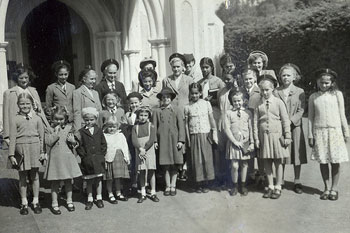
 Karen Vallgårda from the Saxo Institute, Section for History at University of Copenhagen, defended her doctoral dissertation entitled ”Bringing Children into the Fold. Danish Missionaries in Colonial South India 1864–1918” on Tuesday 16 October 2012. With a background in history and anthropology, Karen has published several articles bringing forth critical perspectives on the history of Danish missionaries in India. The assessment committee consisted of Associate Professor Søren Ivarsson, University of Copenhagen; Associate Professor Elizabeth Elbourne, McGill University; and Professor Bengt Sandin, Linköping University.
Abstract: Bringing Children Into the Fold probes the meanings of childhood in the encounters between Danish Christian missionaries and Indians in the Madras Presidency from 1864 to 1918. Through “micro historical entries” the dissertation examines aspects of the missionaries’ ideas about and efforts directed at different categories of children. The dissertation documents that the missionaries invested remarkable resources in the reform of reproductive practices, in childcare, and in education. They were convinced that children’s education, in the broad sense, was crucial to their growth into Christian adulthood, and that caring for heathen children was a Christian duty. Being a good human being entailed knowing and embodying one’s position in social orders that were both local and colonial. Read more.

 SASNET and the Nordic Centre in India (NCI) university consortium have been granted SEK 400 000 from the Swedish Council for Working Life and Social Research (FAS) for organizing a workshop entitled “Urbanization and Migration in Transnational India: Work and Family Life from a Welfare Perspective” in collaboration with the Institute for Social and Economic Change (ISEC) in Bangalore. The workshop is planned to take place 3–5 March 2013.
Earlier this year, the Swedish Council for Working Life and Social Research announced a special call for proposals for arranging workshops/hearings to explore future research co-operation specifically with India. The purpose is to facilitate contact and the exchange of experience between Swedish and Indian researchers; to bring knowledge from the international research community to Swedish research; and to be of considerable value to research in FAS’ areas of responsibility. Decisions were taken on 3 October 2012. Go for the decisions.
Altogether nine projects were approved. Besides the workshop organized by SASNET, NCI and ISEC, eight more research group leaders from Swedish universities were also granted funding for India workshops, three at Karolinska Institutet, two at Lund University, and one each at Stockholm, Umeå and Örebro universities. Full information.
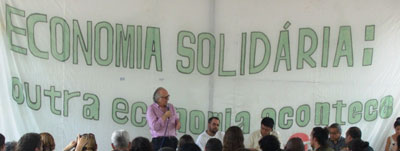
 As the international development community considers a post-2015 development agenda, UNRISD research is focusing on ”alternative” development policy and strategy. One strand of this inquiry concerns advocacy, policy and practice related to ”Social and Solidarity Economy” (SSE). The United Nations Research Institute for Social Development (UNRISD), based in Geneva, Switzerland, invites researchers to submit proposals for papers that critically examine the scope for expanding social and solidarity economy (SSE), and its potential and limits as a distinctive approach to development.
 Related to this call for papers, should be mentioned that a one-day conference on ”Solidarity Economy and Alternative Finance: A Different Development Model?” that was being held in Geneva on Wednesday 3 October 2012, as a Side Event at the UN Human Rights Council’s 2012 Social Forum, co-organized by UN-NGLS and UNRISD (more information).
The deadline for submitting papers is 15 November 2012. Key themes should be:
– Conceptualizing, measuring and appraising SSE
– Expanding SSE through market relations
– Enabling SSE through public policy and the state
– Social movements, networks and the politics of change
More information.

 The Forum for Asian Studies at Stockholm University was formed in 2010 with the purpose of strengthening research and education with a focus on Asia, including South Asia. The Forum is administered by the Department of Political Science with Henrik Berglund and Eva Hansson being coordinators. Besides, the Forum has an Advisory group with representatives from different departments at the Faculty of Social Science, currently consisting of members from the School of Business; the Department of Education, International and Comparative Education; the Department of Political Science; the Department of Economic History; the Department of Social Anthropology; and the Department of Human Geography. Seminars and lectures of the Forum forms a meeting point for social scientists at Stockholm University, but also for a broader audience, and organizers try to attract guests of high international standard which are at the forefront of the social science research. More information about the seminars.
• Indian Embassy develops social media for increased interaction
The Embassy of India in Stockholm is in the process of increasing its interaction with Indians in general and Indian students in particular that are living in Sweden via the Embassy’s social media. Activities are now continously being uploaded on its Facebook page. Among recent updates could be mentioned information about the Ambassador’s visit to Jönköping University on Thursday 11th October 2012, and her visit to Lund University the following day, when she both participated in a meeting with university researchers and other staff, and attended the ICCR Professor Installation Seminar. All events are illustrated by a generous set of photographs.
Go for the Embassy of India’s Facebook page.
• More information about South Asia related research at Swedish and Nordic universities
See SASNET’s page, http://www.sasnet.lu.se/research-community-news
Educational News
• Indo-Swedish collaboration on the use of puppets in education
 In her research, Dr. Mirella Forsberg Ahlcrona at the School of Humanities and Informatics, University of Skövde, focuses on communication and language development in pre-school children and on the use of puppets as a mediating tool in early childhood education. Since 2011 she has been involved in an ongoing Indo-Swedish collaboration project on those subjects and has visited India twice during this period, last time in June-July 2012.
Among other engagements during her visits, she has arranged workshops and courses for Indian teachers, and in 2013 a number of Indian teachers are planned to visit Skövde and hold workshops on Storytelling in Education for students at the Puppet Education programme (Dockpedagogutbildningen), which is administered by Dr. Forsberg Ahlcrona.
In the latest Issue of the Indian educational magazine Learning Curve (Issue XVIII), she has an article published on the theme of Arts in School Education. More on Dr. Forsberg Ahlcrona’s research and her Indo-Swedish collaborations here.
• Other educational news connected to South Asian studies all over the World
See SASNET’s page, http://www.sasnet.lu.se/education-news
Seminars and Conferences in Scandinavia
• Bupinder Zutshi lectures in Stockholm on Indian Higher Education

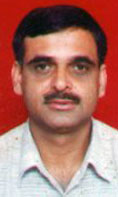 Professor Bupinder Zutshi from the Centre for the Study of Regional Development, Jawaharlal Nehru University (JNU), New Delhi, India, holds a lecture at Stockholm University on Thursday 18 October 2012, at 14.00. He will speak about ”Higher Education: Challenges and Opportunities in India”. The seminar is organised by the Institute of International Education (IIE) at Stockholm University. Venue: IIE, Frescativägen 54, room 1503.
Bupinder Zutshi has more than 35 years of teaching and research experience at graduate, post-graduate and M. Phil/ Ph. D research level. His fields of research interest includes studies on demographic aspects of population. He has researched on status and situation of elementary and higher education in India, child labour conditions and situation, status and conditions of differently abled persons and human trafficking issues in South Asia. He has completed research projects supported by UN Women (UNIFEM), UNESCO (New Delhi), International Bureau of Education (IBE, Geneva), United Nations High Commissioner for Human Rights (Geneva), Ford Foundation (New Delhi), International Labour Organization (New Delhi), the Policy Science Centre, Inc. USA (supported by the Learning and Research Program on Culture and Poverty of the World Bank), US AID, Global March Against Child Labour, National Human Rights Commission of India and Indian Council for Social Science Research.

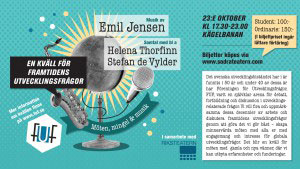 The Swedish Development Forum (Föreningen för Utvecklingsfrågor, FUF) is a non-governmental organisation founded 1972 and based in Stockholm. FUF aims to provide information and raise awareness on global development issues, to support mutual understanding and cooperation. By offering an independent forum for discussion and exchange of ideas between people with different experienes and opinions, FUF hopes to contribute to enhanced knowledge about global development and dedication to a sustainable world.
To celebrate the organisation’s 40 years anniversary, FUF organises an event on Tuesday 23 October 2012, 17.30–23.00, at Kägelbanan, Södra Teatern, Mosebacke 3, Stockholm. It is entitled ”En kväll för framtidens utvecklingsfrågor” and is devoted to discuss issues on 50 years of Swedish development assistance. Invited speakers include the economist Stefan de Vylder and writer Helena Torfinn. Full information.

 Professor Mary E. John from the Centre for Women’s Development Studies (CWDS) in New Delhi, holds an open lecture at Lund University on Monday 29 October 2012, at 14.00. She will speak about ”Gender and Higher Education in the Time of Reforms”. Venue: Centre for East and South-East Asian Studies (ACE), Scheelevägen 15, room Alfa 1010, Lund.
The current moment of higher education reforms in India has yet to receive sustained attention from scholars and activists. Historically speaking, women’s education occupied a central place from the nineteenth century to the first decades of India’s independence, but, curiously, lost prominence with the onset of the women’s movement and the introduction of women’s studies in the academy in the 1980s and since then. Although the participation of women in higher education shows steady improvement and a narrowing of the gender gap, the article examines national-level data to reveal the complex and elusive forms being currently assumed by gender discrimination. This includes recognising that disparities among women from different social groups are greater than those among men of the same groups. Secondly, many of the contexts where gender gaps have closed are also characterised by adverse child sex ratios due to practices of sex selection. Taken together, the current era of expansion in higher education demands analysis from a gendered perspective.

 A public hearing focusing on ”End Caste Discrimination” will take place in Copenhagen on Monday 29 October 2012, 16.00 – 18.30. Campaigners for Dalit rights from South Asia as well as representatives of the Office of the High Commissioner for Human Rights, Danish and international NGOs and the Danish Institute for Human Rights will present their perspectives on current challenges, good practices and ways forward to end caste discrimination. The hearing is organised by the Dalit Solidarity Network in Denmark in association with the Copenhagen based International Dalit Solidarity Network (IDSN). Venue: Danish Institute of International Studies (DIIS), Strandgade 71, Copenhagen.
Caste discrimination is one of the world’s most serious human rights issues and a main cause of poverty. Affecting an estimated 260 million people, mostly in South Asia where they are known as Dalits, caste discrimination leads to massive violations of civil, political, economic, social and cultural rights. Danish Minister for Development Cooperation, Christian Friis Bach, will open the hearing. Participants should register their attendance to info@dalit.dk no later than 25 October (and preferably sooner). More information and programme
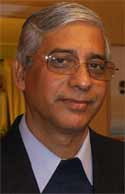 Professor Arun Bandopadhyay from the Dept. of History, University of Calcutta, Kolkata, holds a Forum for South Asia Studies Lecture at Uppsala University on ”Technological Education in a Colonial Context: Bengal Engineering College in late Nineteenth Century India”, on Thursday 1 November 2012, 14.15–15.45. The seminar is organised by the university’s Forum for South Asia Studies. Venue: Department of History, Room 1-1060, Thunbergsvägen 3 A, Engelska Parken, Uppsala.
Development of engineering education in Bengal is a major area of historical research and investigation. It has multifaceted aspects on which our research has mainly focused on. In much of colonial India, Bengal was the core area of all round development especially in the field of education. However, engineering education in India in the late nineteenth century was directly related to ‘the colonial expansionist programme’ and was imposed from above without any educational demand for it at that point in time.
Arun Bandopadhyay is currently Nurul Hasan Professor of History and formerly Dean of the Faculty Council for Post-graduate Studies in Arts at the University of Calcutta. His research interest covers a wide range of areas: agrarian history, business history and history of science and environment.

 The Asia Research Centre at Copenhagen Business School (CBS) organises a public postgraduate student lecture series on ”The Political Economy of Transition in India” during the month of November 2012. The lecture series is arranged in cooperation with Contemporary South Asian Studies at Oxford University; and the Centre of Development Studies at Cambridge University, UK. The lectures take place over the course of five Thursdays, and every time from 10.00 till 12.00. Lecturers include Dr. Mathew McCartney, Oxford University, who will speak about ”Liberalization and the Role of the State in India 1980-2012”; Dr. Shailaja Fennell, Cambridge University, who will speak about ”Challenges and Opportunities for Indian Agriculture in a Globalized Food Market”; Professor Anthony D’Costa, Asia Research Centre, CBS, who will speak about ”Compressed Capitalism and the New India”; Professor Sebastian Morris, Indian Institute of Management, Ahmedabad and current ICCR Visiting Professor in Indian Studies at CBS, who will speak about ”The Politics and Economics of Public Service Failure in India and the New Mantra of PPPs”; and Professor Barbara Harriss-White, Oxford University, who will speak about ”Capitalism and the Common Man – The Big Problem of Self-Employment In India”.
The lectures are free of charge and everybody is most welcome, but please register by writing to arc.int@cbs.dk. Registration begins on October 1. Venue: Copenhagen Business School, Dalgas Have 15, Frederiksberg.
Full information. See the seminar series poster.
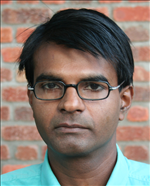
 Dr. Kaushik Roy, ICCR Visiting Professor to Aarhus University, Denmark, lectures on ‘Democracy and its Perils in South Asia’ on Tuesday 6 November 2012, at 14.15. It will be the First Aarhus University ICCR Lecture on India. Venue: Building 1455, Room 127, Jens Chr. Skou’s Vej 1, Aarhus.
Dr. Roy is Reader in History at Jadavpur University, Kolkata and Research Fellow at the Peace Research Institute in Oslo (PRIO). Dr. Roy has published extensively on warfare and military history in a broad social context both within South Asia and globally. His latest book ”Hinduism and the Ethics of Warfare in South Asia” will be published by Cambridge University Press in December 2012. Other publications include ”War, Culture and Society in Early Modern South Asia, 1740-1849” (Routledge, 2011) and the edited volume ”War and Society in Colonial India” (Oxford University Press, 2010).
See SASNET’s page, http://www.sasnet.lu.se/lectures-in-scandinavia
Conferences and workshops outside Scandinavia
• Central Eurasian Studies Society’s Annual Conference in Bloomington
The Central Eurasian Studies Society’s (CESS) Thirteenth Annual Conference will be held 18–21 October 2012 in Bloomington, Indiana, USA. CESS is a private, non-political, non-profit, North America-based organization of scholars who are interested in the study of Central Eurasia, and its history, languages, cultures, and modern states and societies. Its purpose is to promote high standards of research and teaching, and to foster communication among scholars through meetings and publications.
Panels and paper proposals relating to all aspects of humanities and social science scholarship on Central Eurasia are welcome. The geographic domain of Central Eurasia extends from the Black Sea and Iranian Plateau to Mongolia and Siberia, including Afghanistan, Tibet, and Central Asia. Practitioners and scholars in all humanities and social science disciplines with an interest in Central Eurasia are encouraged to participate. Full details about the conference.

 On 19–21 October 2012, the Department of Religion at Hofstra University, New York, USA, organises a conference on ”Sikhi(sm), Literature and Film” with the purpose to explore the literary and visual cultures within, or pertaining to, Sikh traditions both in Punjabi and Diasporic contexts. The conference aims to chart new territory by exploring the aesthetic and expressive traditions within Sikh and Sikhism and proposals for papers are invited in two major areas: literatury cultures, and visual cultures. For the former, proposals that work with the broader literature such as –romance (kissaa), – ballad (of war/strife, vaar), – lyric (revelation), – hagiography and biography (Janamsaakhiis), – didactic and devotional (revelation, commentarial), – revival and reform (political, nationalist, moral/didactic tracts), – fiction and short story, – poetry and new poetry, – prose, – drama and play, are welcome.
For the virtual cultures track proposals are welcome from the on – Cinema/Film (Bollywood, Hollywood, Lollywood and Independent productions, Internet websites, YouTube, Vimeo, Music video-Rap, Bhangra), – TV (terrestrial and satellite stations), – Comic (Amar Chitra Katha, Sikhtoons), – Fine Arts (miniature paintings, court paintings, modern art, photography, contemporary art), – Commerical Art (calendar art, lithographs), – Fashion and Advertising (e.g. Sonny Caberwal ,Vikram Chatwal, Waris Ahluwalia), – Museum Exhibitions (V&A, Rubin Museum, Smithsonian etc), – Architecture (monumental, temple and residential).
 The Second Students’ Conference on Bengal Related Studies will be held in Halle (Saale), Germany, on 27–28 October 2012. It is hosted by the South Asia Seminar, Institute of Oriental Studies, Martin Luther University Halle-Wittenberg along with the association Bengal Link e.V. and the Arbeitskreis Neuzeitliches Südasien of the Deutsche Gesellschaft für Asienkunde e.V. (DGA). The Martin Luther University Halle-Wittenberg is one of the two German universities where research on the Bengal regions, Bengali language and culture has been an integral part for a long time. After the emergence of numerous studies on the Bengal regions disciplines other than South Asian Studies (e.g. Social Anthropology, Sociology, Development Studies, Urban Planning), the conference organisers realised the necessity of giving students and young scholars an option to discuss their various topics and research ap-proaches among each other across disciplinary borders, and of building up an interdisciplinary network for Bengal Related Studies.
The aim of the conference is to provide an inter-disciplinary venue for young scholars who focus on the Bengali regions in their studies. Halle-Wittenberg is one of the two German universities where research on the Bengal regions, Bengali language and culture has been an integral part for a long time. After the emergence of numerous studies on the Bengal regions from other disciplines (e.g. Social Anthropology, Sociology, Development Studies, Urban Planning) the conference organisers realised the necessity of giving young scholars an option to discuss their various topics and research approaches among each other and of building up an interdisciplinary network for Bengal Related Studies. After the success of the first conference in 2010 the organisers are very much looking forward to hosting the second one.
Among interesting papers to be presented could be mentioned one by Magdalena Lipinska (University of Hamburg) on ”The Partition of Bengal (1947) in the Bengali Novel, on the Example of Taslima Nasrin’s Pherā”; one by Elisabeth Fink (Goethe University Frankfurt) on ”From Social Mobilisation to Service Delivery? The Impact of International Support on Trade Unions and Labour Organisations in the Ready-Made Garment Sector in Bangladesh”, and one by Kirsten Hackenbroch (TU Dortmund University) on ”Dhāndābāj or Civil Society? An Analysis of the Discussion of the Future of Korail Neighbourhood in Dhaka”. More information about the Halle conference.

 The Archive India Institute in Bangalore, India organizes its first annual one-day conference on ”Kingship in Indian History” on Friday 2 November 2012. The conference main topics will be as follows: – Kingship and Political Theory; – Kingship as an Ideal; – Kingship as a Value; – Forms of Kingship in Theory and Practice; – Changes and Continuities in Kingship Theories and Practices; – Kingship and Gender. The conference is organised as part of the effort of Archive India Institute to promote research by way of organizing seminars, conferences, workshops and symposia on all aspects of premodern South Asian history, and by publishing books, booklets, periodicals, pamphlets and other forms of literature relevant to the study of premodern South Asian history. The Institute works also on digitalization of the textual heritage of premodern India. Full information about the conference.
 An International conference on ”Textile Trades and Consumption in the Indian Ocean World, from Early Times to the Present” will be held in Montreal, Canada, 2–4 November 2012. It is organised by the Indian Ocean World Centre (IOWC) at McGill University. This multi-disciplinary international conference aims to bring together scholars from across the humanities and social sciences to share findings, methodologies and theoretical perspectives on cloth’s critical role in driving exchanges in the Indian Ocean World from early times to the present day. More information.

 The British Development Studies Association (DSA) annual conference 2012 will take place in London on Saturday 3 November 2012. Venue: Institute of Education, 20 Bedford Way, London.
The 2012 conference intends to build on the last three DSA conferences (2009: Current Crises and New Opportunities; 2010: Values and Ethics; 2011: Rethinking Development in an Age of Scarcity & Uncertainty) plus the New Ideas Initiative launched in January 2012. The Keynote Speaker is Ha-Joon Chang from the University of Cambridge.
The panels are varied, some of the most interesting focus on ”The Millennium Development Goals: Social Engineering and Resistant Practices”; ”Poverty dynamics and social mobility: new insights and understandings”; ”Global poverty and middle-income countries: Is global poverty becoming a matter of national inequality?”; and ”How Change Happens – reflections from theory and Oxfam practice”. More information.

 The Shriram Institute for Industrial Research in New Delhi, India organizes an international conference on “Technological Innovations: For All Inclusive Growth” 8–9 November 2012. The purpose of the conference is that state of-the-art technologies in areas relevant to the growth of science and technology, as well as for the benefit of society as a whole, should be presented to achieve an all inclusive growth. Keeping in view the important aspects associated with poverty alleviation, societal growth, technological advancement and sustainability, different sessions will be dedicated to different industry sectors. The aim is to provide a platform for constructive and interactive actions amongst stakeholders. In each session the emphasis will be given to a 360° approach to the innovation cycle starting from fundamental research, ending into its implementation. More information.

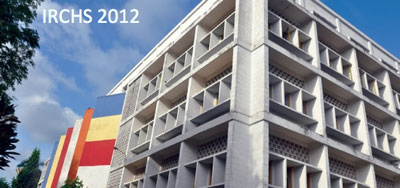 The University of Sri Jayewardenepura in Nugegoda, Sri Lanka, organises its First International Research Conference on Humanities and Social Sciences (IRCHS) on 8–9 November 2012. The main theme is “Honouring the Past, Treasuring the Present, Navigating the Future: Making Knowledge to Deliver”. This is intended to be a premier forum for academics and professionals to share their research on various perspectives of Humanities and Social Sciences. The conference tries to identify the multiple dimensions associated with the advancement of humanities and social science related disciplines through past to present and to the future so that a proper appreciation of the past, evaluation of the present, and envisaging the future can be readily acknowledged. The proposed tracks/themes are a doorway to establish this vital link in order to survey the related disciplines with an open mind. The conference is chaired by Professor Sunethra Thennakoon. More information.

 A three day International Conference on “Religion & Globalization: A Changing Perspective” will be held in Kolkata, India, 29 November – 1 December 2012. It is being organised by the Centre for the Study of Religion and Society (CSRS), a unique endeavor of the Dept. of Sociology at Jadavpur University established in 2011 (in collaboration with Swedish researchers at the universities of Gothenburg, Uppsala and Lund).

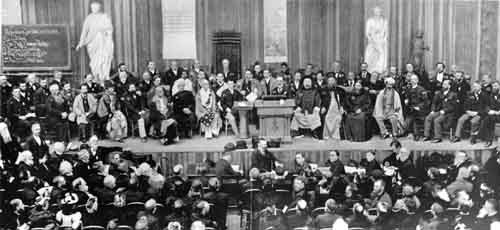 The conference takes its point of departure from the coming 150 years anniversary celebration of Swami Vivekananda’s speech at the World Parliament of Religion in Chicago in 1893. The Chicago speech became a landmark in the relations between Indic religions and the West. Vivekananda succeeded in creating a platform for interaction between India and the West that opened up the way for others to follow. His venture was based on particular philosophical, intellectual and social audience.
The conference invites papers and critical reflections about this and similar processes of religious globalization within a colonial, postcolonial and postmodern context. Within this theme, papers may address the issue of themodern construction of religion, Vivekananda, Rabindranath Tagore and other’s ideas about universal religion, and the concept of religion itself in an Indian and global context. The conference may open discussions about the role of religion in a
secular society and howreligion and religious discourses create and stimulate communal and political violence orperspective that had the ambition to speak for a globalresist it, within and across national borders. Finally, the
conference invites discussions about the way religions transform and find new channels to grow and interact
with secular societies, both in India and beyond. Abstracts should be submitted before 30 october 2012. For more details, contact the conference convenor, Dr. Ruby Sain.
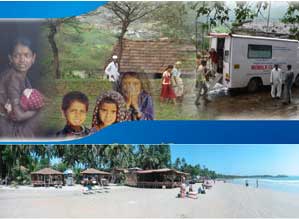 The 18th International Congress of Rural Health & Medicine will be held from 10–12 December 2012 at Panjim, Goa. The congress is organised by the Pravara Institute of Medical Sciences at Deemed University, Loni, India, in collaboration with the International Association for Rural Health and Medicine, Japan and the congress theme will be ”Challenges for Health in Global Villages”. The congress aims to promote a dialogue among NGOs, academics and government on global issues related to rural health in connection to the achievement of the Millenium Development Goals.
Dr. APJ Abdul Kalam, former President of India will inaugurate the congress and deliver the key note address. In early October 2012 already more than 425 delegates had registered, coming from 15 countries including Australia, Germany, Japan, Nepal, and Sweden. Professor Ingalill Rahm Hallberg, Assistant Vice Chancellor at Lund University (and Professor in Health Care Science); Professor Peter Lindqvist from the Swedish Agricultural University (SLU); and Mr. Lars-Olof Lindgren, Ambassador of Sweden to India, have been members of the advisory committee planning for the congress. Full information on the congress website.
 The British Association for South Asian Studies (BASAS) will hold its 27th Annual Conference at the University of Leeds, 3–5 April 2013. The organisers invite proposals for whole panels as well as individual papers. As usual, proposals from the full range of disciplines reflected within the broad membership of BASAS are invited. A single panel will run for 90 minutes and may include 3-4 papers. Submissions should include a panel title and abstract together with abstracts for each of the panel papers. Deadline for submission of panel and paper abstracts is December 1, 2012. More information here.

 The Dept. of Humanities and Social Sciences at the Lahore University of Management Sciences (LUMS) in Pakistan hosts a conference on ”Asian Ecologies: Capitalism, Modernity and the Environment” on 5–7 April 2013. Beyond the headlines, Pakistan boasts a vibrant civic culture and committed activist community whose extensive engagement with the conference will be facilitated by the chosen format: Panels and moderated roundtables that allow for maximum exchange of ideas between scholars and community organizers, artists and journalists whose daily work is rooted beyond the academy. Scholarship on Ecology in the fields of Arts, Anthropology, Cultural Studies, Geography, History, Philosophy, Political Science, Sociology, and Womens Studies is growing and the organisers welcome proposals dealing with all aspects of Asian ecologies past and present. Conference proceedings are intended to be published in an edited volume or journal special issue. Abstracts should be submitted by 10 November 2012. Full information about the conference.
• Other conferences connected to South Asian studies all over the World
See SASNET’s page, http://www.sasnet.lu.se/conferences/conferences
Business and Politics
• Sixth Sweden India Nobel Memorial Week to be held in India

 For the sixth consecutive year, the Sweden India Nobel Memorial Week (SINMW) will be held in India during the period 27 October – 4 November 2012. This high-profile event is organized by the Embassy of Sweden in cooperation with Exportrådet, Invest:Sweden and Swedish Energy Agency; but also companies – ABB, Atlas Copco, Ericsson, IKEA, Oriflame, SAAB, Sandvik, Scania, SEB, Tetrapak, Volvo and Volvo Cars. The theme for 2012 is The Energy of Innovations: Co-creating the Future, and it will take place in Mumbai, Pune, Bengaluru, Chennai, Hyderabad and New Delhi.
The Week which comprises a number of events – ranging from seminars and panel discussions among well-known decision makers from government and businesses as well as researchers and academicians – both from the Indian and the Swedish side; to competitions for students, to cultural performances, to exhibits, to the presence of the Nobel Chef, among others. See the programme.
• SIBC seminar with Indian Ambassador in Malmö

 Sweden-India Business Council (SIBC) organises a business seminar in Malmö on Friday 26 October 2012, 10.00–12.00 with the new Indian Ambassador to Sweden Mrs. Banashri Bose Harrison. Venue: Malmö Börshus, Skeppsbron 2. The seminar is jointly organised by the The Sweden-India Business Council (SIBC), the Chamber of Commerce and Industry of Southern Sweden, and Invest Skåne, being part of a series of seminars held at different places in Sweden in order to highlight business relations between India and Sweden. More information about the SIBC seminar.
South Asia related culture in Scandinavia

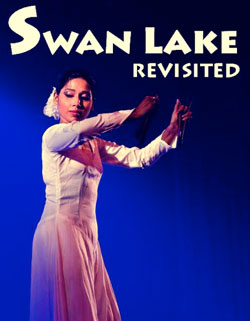 An Indian version of the classic story of the classic Russian ballet Swan Lake, entitled ”Swan Lake – Revisited”, will be set up at stages in Copenhagen and Stockholm during October 2012. The Rhythmosaic Dance Company gives two guest performances at the Royal Danish Theatre in Copenhagen on 20th and 21st October, as part of the ongoing India Today/Copenhagen Tomorrow festival. It will be the Word Premiere for the show. The Embassy of India in Stockholm organises a performance at Nybrokajen Theatre in Stockholm on Monday 29th October 2012.
 A separate Workshop on Kathak Dance and its choreographic approaches will be organised in Stockholm as well. It will be led by Dr. Mitul Sengupta (photo), Mr. Gianin Loringett and Ronnie Shamik Ghose with Rhythmosaic Dance Company on Sunday 28th October. The workshop is organised by Den Asiatiska Dansakademien in Sweden. Send an e-mail to info@denasiatiska.se for more information.
Swan Lake Revisited is a project by the French choreographer Gianin Loringett in collaboration with the two Indian choreographers Shambik Ghosh and Mitul Sengupta, who have exchanged ideas and steps across time zones and borders to come up with an alternative, modern bids on the classic Swan Lake. The audience will get a taste of the traditional Indian dance Kathak. The performance is similar to the ballet version in that case that it’s a love story, where the evil Von Rothbart has turned Princess Odette into a swan by day, and Prince Siegfried falls in love with her one night – where she is the human ego. But even if the theme is similar to the original story, so is the plot of Swan Lake Revisited pulled up to the present. More information on the Copenhagen performances.
More information on the Stockholm performance.
New and updated items on SASNET web site
• Swedish departments where research on South Asia is going on
Constantly added to the list of research environments at Swedish universities, presented by SASNET. The full list now includes nearly 300 departments, with detailed descriptions of the South Asia related research and education taking place! See the full list of departments here: http://www.sasnet.lu.se/institutions/reserch-environments
• Useful travelling information
Look at our Travel Advice page. Updated travel advises from the The British Foreign & Commonwealth Office about safety aspects on travelling to the countries of South Asia.
Best regards
Lars Eklund
Deputy director/webmaster
SASNET/Swedish South Asian Studies Network